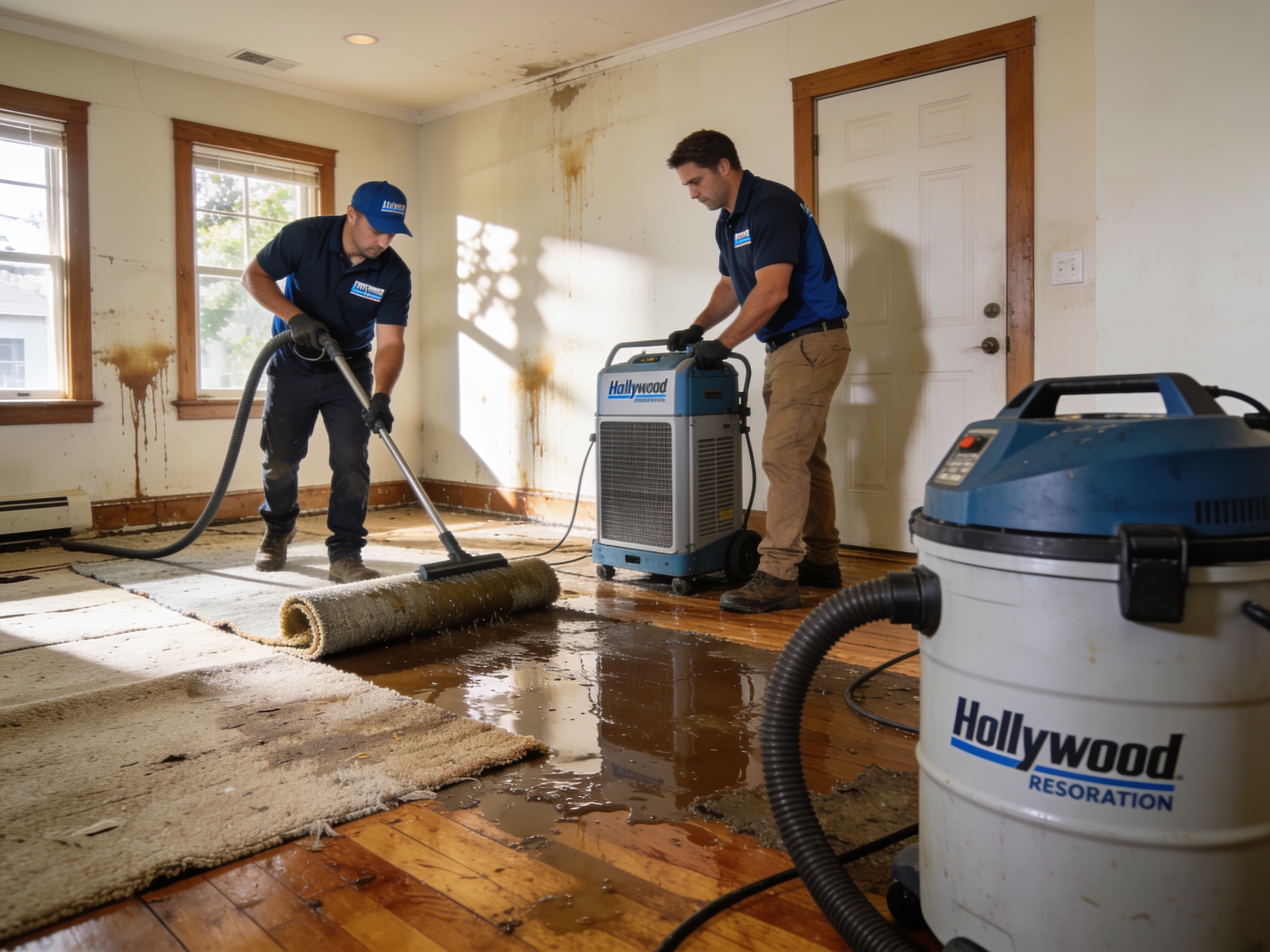
Water damage restoration in Fort Lauderdale starts with one phone call to (954) 707-5047. We remove standing water, dry the structure and restore what the water damaged. When moisture has already led to mold growth, we also handle mold remediation. Our office is in Hollywood, directly south of Fort Lauderdale, and we serve Fort Lauderdale homes, condominiums and businesses.
Fort Lauderdale is a major Broward County city. The Census Bureau's July 1, 2025 estimate puts its population at 188,677, across 80,999 households, and the city sits directly north of Hollywood. That scale covers a wide mix of homes, condominiums and businesses. Each has its own plumbing, air conditioning and roof, and each can take on water from a different source.
Water in a Fort Lauderdale property rarely waits for a convenient moment. A slow leak behind a wall can spread for days before anyone sees a stain, and a storm can push water in through doors, windows and drains at the same time. The sooner water is removed and the structure is dried, the less is lost to swelling, staining and mold. If you find water, stop the source if you can do so safely, move valuables out of the wet area and call us so the work can start with the damage as it is.
Fort Lauderdale also has its own building rules. The city's Building Department Flood Section administers the floodplain ordinance, C-23-46, so a repair in a flood hazard area can carry permit requirements that go beyond a routine fix. Those rules are covered in the permits section below, along with the water risks that shaped them.
Fort Lauderdale's water risks
The most important recent water event in Fort Lauderdale is the rain of April 12, 2023. It was the most extreme rainfall flooding in the city's modern record, and water reached two to three feet deep inside some homes. That level of water is the reason this event matters to anyone repairing a property here.
The rain was not confined to one neighborhood. A large area of 15 to 25 inches fell from Fort Lauderdale south over the airport, so the risk reaches well beyond any single block.
Outside of major storms, the everyday water risk in Fort Lauderdale is the same one found in most South Florida homes. Plumbing leaks inside walls and under floors, failed or overflowing air conditioning condensate lines, and roof leaks after heavy rain or wind can keep water moving into a structure for days or weeks before anyone discovers it. These are ordinary failures, but they can cause the same kind of damage as a storm.
A Fort Lauderdale property owner should think about water risk in two layers. The first is the sudden event, such as a storm that overwhelms drainage. The second is the slow, hidden leak that keeps soaking a wall or floor long after the weather has cleared. Both need a written record of what was damaged, and both can affect the scope of the repair. Because the damage can start from a single pipe, a roof leak or a storm, the first job is to find the source, remove the water and document what was affected. Ordinary leaks and major storms both leave a property that must be dried before it can be repaired, and both can bring mold if the moisture stays in place.
What this business does in Fort Lauderdale
We serve Fort Lauderdale from our Hollywood base. Our work for Fort Lauderdale properties falls into two service areas, and each is explained on its own page.
Water Damage Restoration is the main service for water in a Fort Lauderdale home or business. That page covers leak detection, storm damage restoration, water removal and water extraction as parts of one service, so a property owner does not have to sort out which term applies. The service includes:
- Leak detection to find where water is entering
- Storm damage restoration after rain, flooding and wind events
- Water removal and water extraction to clear standing water
- Drying the structure and repairing what the water damaged
Mold Remediation covers mold growth in Fort Lauderdale properties, including the mold inspection that comes before any removal work. Mold is treated as a moisture problem as well as a surface problem, so the page explains why the source must be corrected for the work to hold.
The April 2023 rain is the reason this work matters here. Owners who have repaired a property in the last two years should know that earlier work can shape today's scope decisions. Checking that history before the scope is set keeps the repair on the right track.
Both services are documented from the start. Photos of the damage as it is found and a written description of the scope are part of the work, so the owner and anyone reviewing the property have the same record.
Fort Lauderdale local facts
April 12, 2023: the record storm
On April 12, 2023, 25.91 inches of rain were recorded at the Fort Lauderdale-Hollywood International Airport in 24 hours, according to NOAA and National Weather Service Miami. The airport's WeatherSTEM station recorded 20 of those inches between 4 p.m. and 10 p.m. alone. NWS Miami issued its first Flash Flood Emergency ever for metro Southeast Florida that evening. The heaviest rainfall area carried a 0.1% annual exceedance probability, meaning a 0.1% chance of being equaled or exceeded in any given year. Fifteen to 25 inches fell across a large area from Fort Lauderdale south over the airport toward Hollywood. For Fort Lauderdale owners, the event shows that a single rain can overwhelm drainage and leave water in buildings long after the rain stops.
Water inside homes: what two to three feet does
NWS Miami's survey after the April 2023 storm found homes where water reached two to three feet deep inside. NWS described that depth as very rare for rainfall flooding in South Florida. Drywall that has taken on water to that height usually has to be cut open so the wall cavity can be dried and checked, because it loses strength and wicks moisture upward. Flooring, including carpet pad and wood or laminate over a subfloor, often has to come out so the subfloor can dry. Base cabinets and vanities can swell, delaminate or come loose from the wall, and their particleboard does not recover well. Furniture, electronics, appliances and stored contents at that depth are often lost or need specialist cleaning. Every hour the water stays in place adds to the moisture held in the structure, which is why removal and drying come before any rebuilding.
The Flood Section and ordinance C-23-46
The City of Fort Lauderdale Building Department's Flood Section administers the city's floodplain ordinance, C-23-46. For a property in a Special Flood Hazard Area (SFHA), the Flood Section sets out what a permit application must contain. The package includes a detailed cost estimate for the work, an elevation certificate or the most recent survey, and current photos of the property, with interior photos required if the property was damaged. It also includes a detailed description of the work and notarized affidavits signed by both the owner and the contractor. Together, these documents show the Flood Section what the building looked like, what it will cost to restore and what will be done. Because the affidavits are notarized, the paperwork has to be accurate from the start. A missing document or a vague scope can hold up the whole application.
The cumulative two-year rule
Fort Lauderdale measures substantial improvement on a cumulative basis. Under ordinance C-23-46, all improvement and repair costs within a two-year period count together against the 50% threshold, not just one project at a time. Substantial damage uses the same 50% line, measured as repair cost against the structure's market value, and it applies to damage from any cause, including flood. When a building reaches that threshold, the lowest floor and all machinery serving the building must meet the ordinance's elevation minimums for flood protection. A repair that looks small on its own can join earlier work on the same property and change what the city requires. Owners who repaired a property in the last two years should check their records before scoping new work.
Permits after water damage in Fort Lauderdale
A Fort Lauderdale property's repair history matters to today's water damage repair. Under the cumulative two-year rule, improvements and repairs made within the last two years can be added to the cost of the current job. A water repair that looks modest may cross the 50% threshold once those costs are combined, and that turns the work from a repair into a compliance project. Knowing the property's recent repair history before the scope is set is one of the most useful things an owner can do.
The Flood Section reviews the application as one package, and the timing of that package matters. Gather the elevation documents early, because the elevation requirements set the baseline for the rest of the work. Estimates, photos and affidavits should be prepared together so they describe the same job.
Scope and documentation should be settled before work starts. Photos of the damage as found, a written description of the affected areas and a clear list of what will be repaired give the Flood Section a complete picture. Changing the scope after work begins can mean new estimates, new photos and new affidavits. We document damage as we find it so the property owner has an accurate record.
This business does not file or approve permits. Whether a permit is required for a given repair, and what the application must show, is decided by the City's Flood Section. Property owners should confirm those requirements with the City before work is scoped, and keep copies of every document submitted. Any question about what the City will accept should go to the Flood Section directly.
Reaching us from Fort Lauderdale
Our office is at 3009 S Ocean Dr Apt 429, Hollywood, FL 33019. From Fort Lauderdale, the distance is about 7.7 miles in a straight line and about 10.8 miles by road, according to MapSof distance data. Those figures describe the distance between the two cities. They are not a measure of how quickly we can reach a property in Fort Lauderdale.
Calling (954) 707-5047 is the way to reach us. This site does not use a contact form.
When you call, have these details ready so the conversation is useful:
- The Fort Lauderdale property address and whether it is a house, condo or business
- Where you see water, and whether it is still coming in
- When you first noticed the damage and whether it followed a storm or a leak
- Any photos you have already taken
- Any notice from the City of Fort Lauderdale or your insurance company about the property
Frequently asked questions
What happened in Fort Lauderdale during the April 2023 flood?
Rain totaling 25.91 inches fell at the Fort Lauderdale-Hollywood International Airport within a single day. A National Weather Service survey later found homes with water two to three feet deep, a depth it described as very rare for rainfall flooding in South Florida. That evening, NWS Miami issued its first Flash Flood Emergency for metro Southeast Florida.
How does Fort Lauderdale's two-year cumulative substantial-improvement rule work?
Under ordinance C-23-46, the City counts all improvement and repair costs made to a building within a two-year period together. That total is compared with 50% of the structure's market value. If the total reaches the 50% line, the building counts as a substantial improvement, and the lowest floor and all machinery serving the building must meet the ordinance's elevation minimums. Substantial damage uses the same 50% test for repair costs from any cause, including flood. Owners who have repaired a property in the last two years should check those records before scoping new work.
What does the Fort Lauderdale Flood Section require in an SFHA permit application?
For a property in a Special Flood Hazard Area, the Flood Section requires a complete application package covering cost, elevation, photos, the work description and notarized affidavits. Gather these documents before work starts so the scope is settled first. The City, not this business, decides whether a permit is required and whether an application is approved. Owners should confirm the current requirements with the Flood Section before scoping the work.
How far is the business from Fort Lauderdale?
The business is based at 3009 S Ocean Dr Apt 429, Hollywood, FL 33019. Fort Lauderdale is about 7.7 miles away in a straight line and about 10.8 miles by road, according to MapSof distance data. Distance does not change the scope of work, which depends on the damage. Water damage restoration and mold remediation both start with the same phone number. To talk about a property in Fort Lauderdale, call (954) 707-5047.